

Pearl Liu
, a Burgundy enthusiast with a special interest in old wines and wine history. Through bottles, labels, and archives, she explores the history, vignerons, domaines, and heritage behind Burgundy wines, from celebrated names to forgotten chapters of the past.
A 1928 La Romanée From the Legendary La Rôtisserie de la Reine Pédauque
The name of one of Paris’s finest restaurants of its time,
an image of a French mythic figure;
and one of Burgundy’s most prestigious Grand crus,
all come together on this bottle:
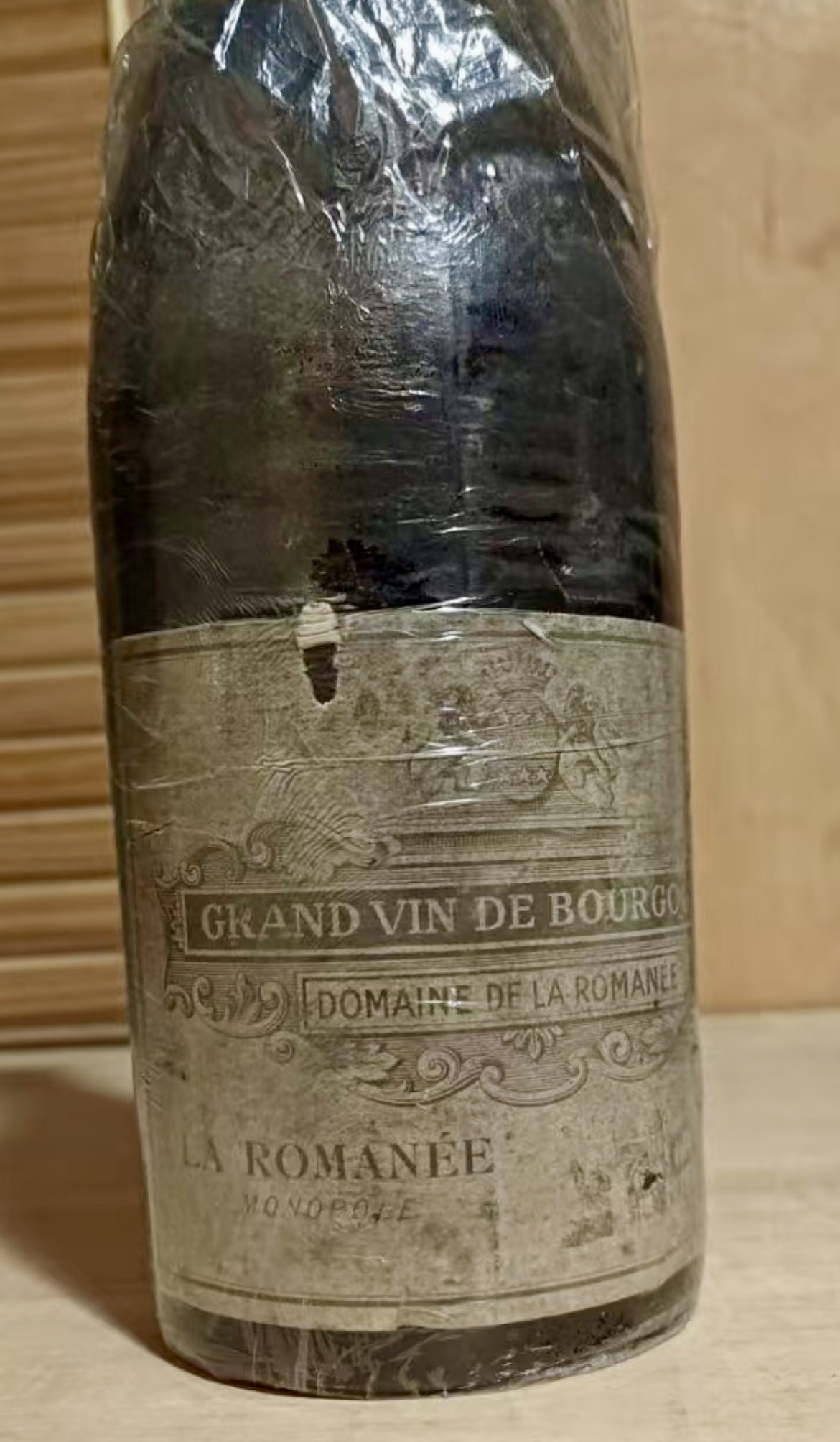
Romanée La Rôtisserie de la Reine Pédauque 1928
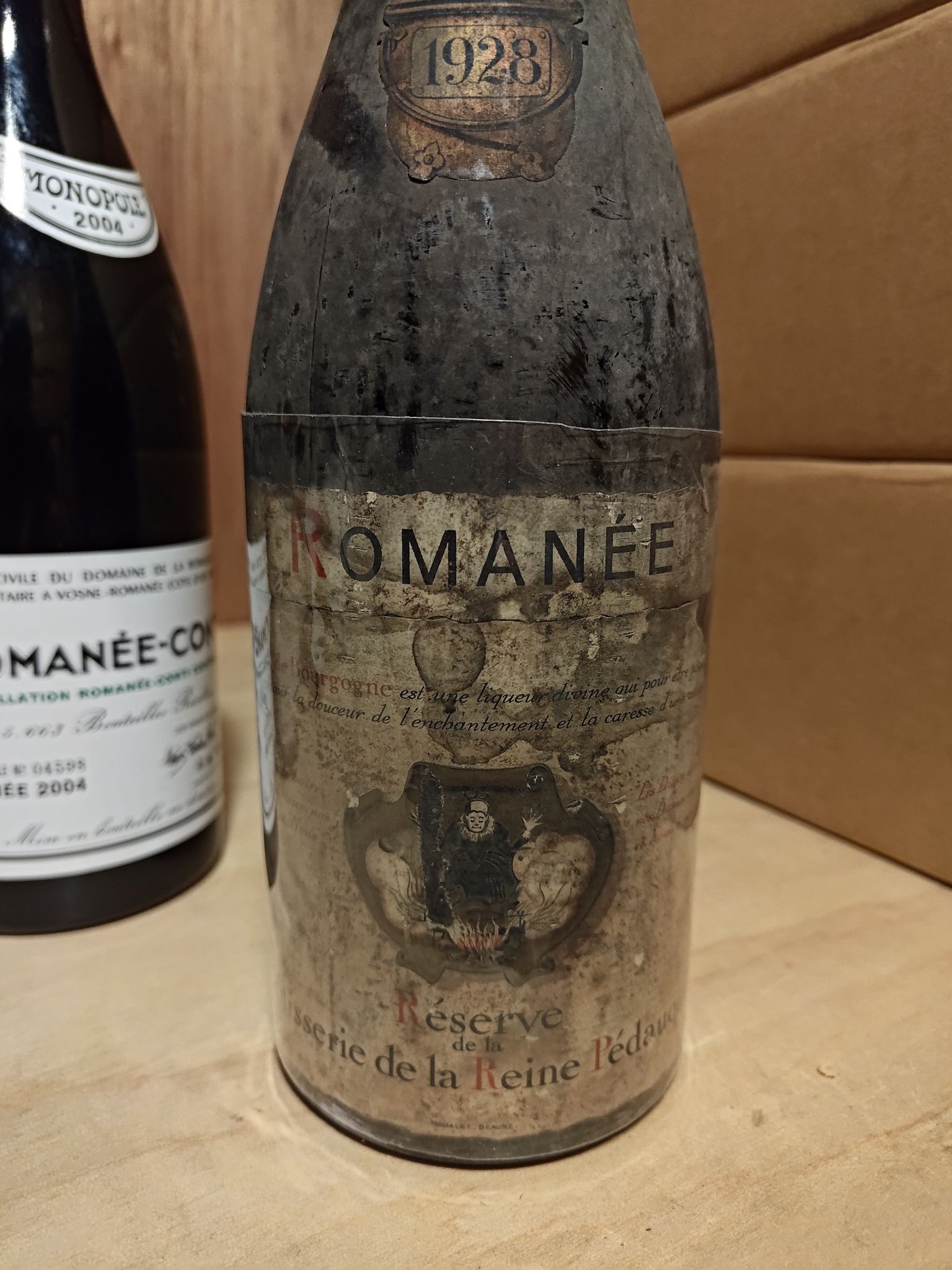
This bottle looks like it has quite a story to tell.
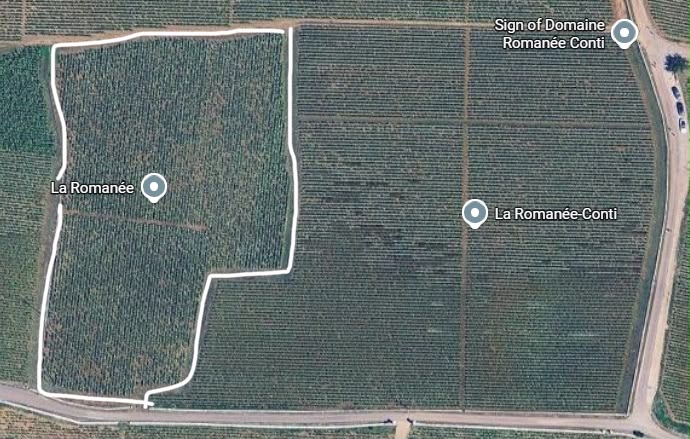
La Romanée (sometimes written as “Romanée” in the past) is one of the most prestigious Grand Crus vineyard located directly beside Romanée-Conti. It is a monopole of only 0.85 hectares and has belonged to the Liger-Belair family since 1826.
As for the Parisian restaurant, La Rôtisserie de la Reine Pédauque, why did it bottle such a prestigious Burgundy wine back in 1928?
To unravel the mystery behind this bottle, we can begin with two menus dating from 1929.
The Musée Carnavalet – Histoire de Paris preserves two original menus from the restaurant.
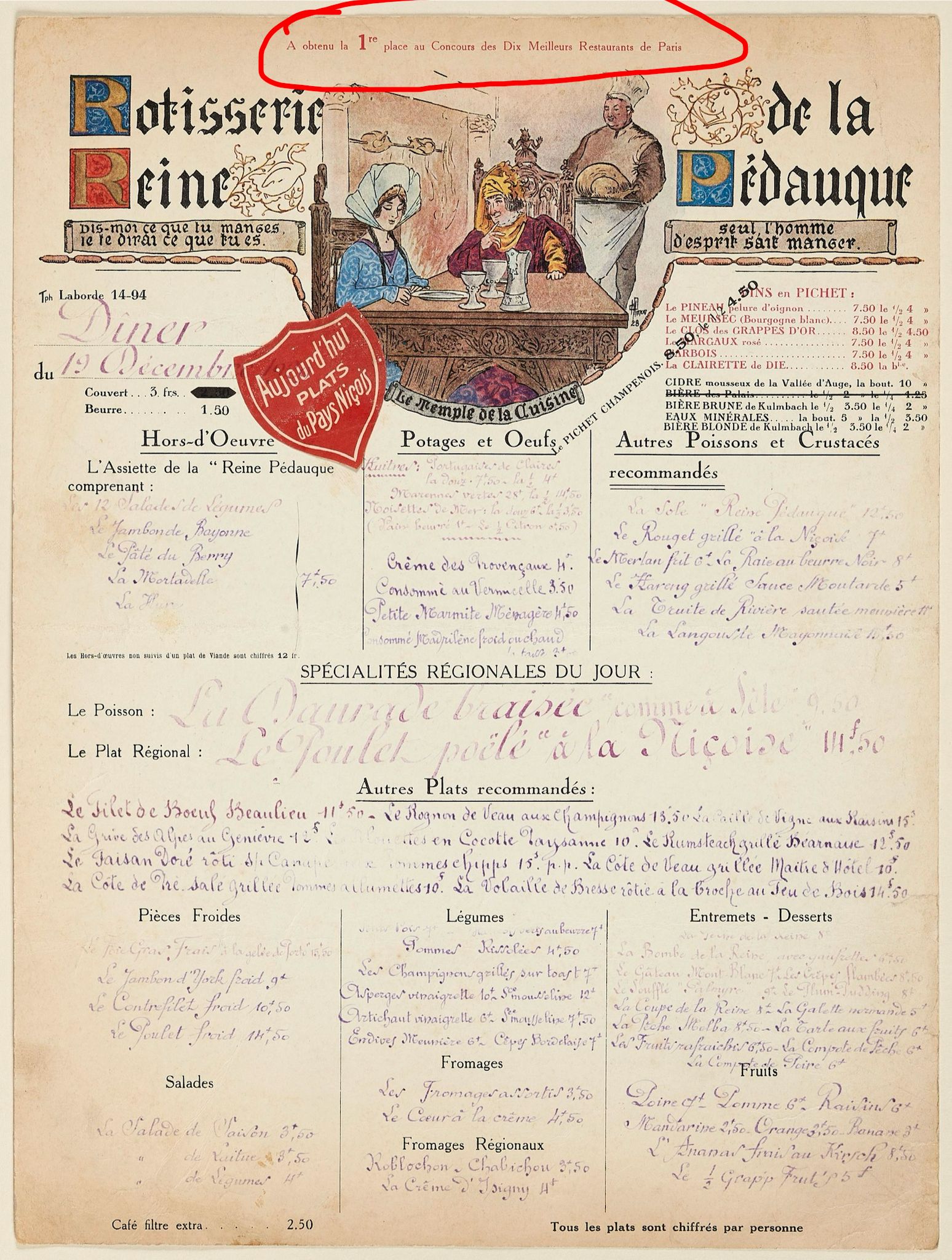
At the top of one menu appears the following statement:
“Winner of First Place in the Competition of the Ten Best Restaurants in Paris”(A obtenu la 1ère place au Concours des Dix Meilleurs Restaurants de Paris)
Today we do not know when this competition took place, but it proves that La Rôtisserie de la Reine Pédauque was one of the most celebrated fine dining establishments in Paris at the time. In Fact, the restaurant, located in central Paris near Gare Saint Lazare, was once a hub for Parisian politicians, businessmen, artists and writers. The French novelist Anatole France was a regular guest and published a novel of the same name as the Restaurant in 1893.
Looking at their wine list from 1929, we find many famous wines, including Château Margaux and Château Latour.
For Burgundy, one wine stands out in particular: Romanée 1919.
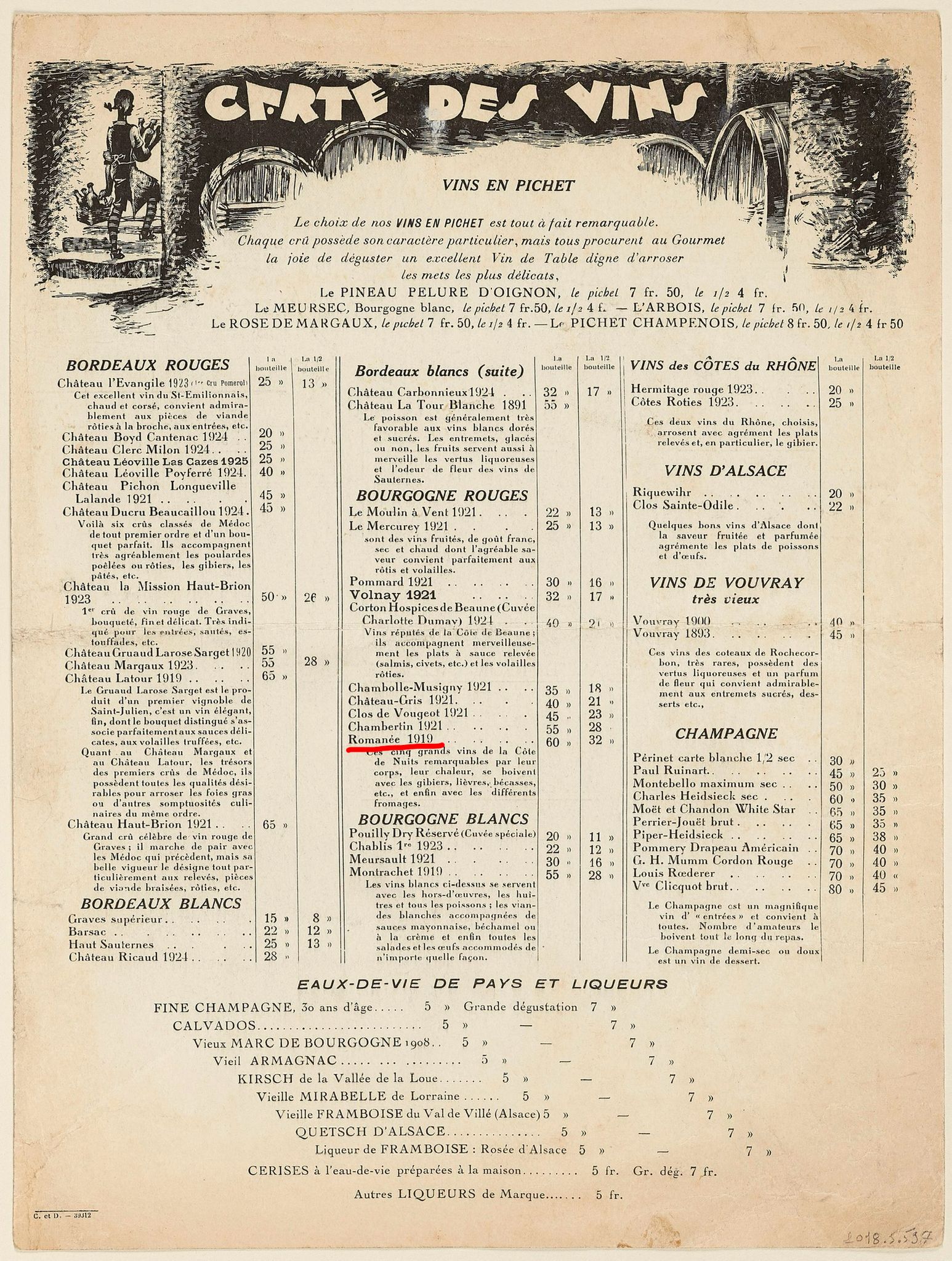
As the menu dates from 1929, the 1928 vintage does not appear, only the older 1919 vintage. This suggests that the restaurant may have been offering La Romanée from at least 1919, and perhaps even earlier.
This restaurant had a large cellar (cave), making it likely that wines werer purchased in barrel from domaines and bottled on site, then sell to their guests. It’s a similar situation as in the previous article about the Chevillot family’s Tâche-Romanée: restaurateurs/hoteliers bottled wines by themselves with their own labels, and sold mostly to their restaurant guests.
Before 1933, La Romanée existed in different forms. It was bottled both by the domaine itself and by various négociants. For example, Bouchard Père & Fils bottled some La Romanée in the late nineteenth century.
In this context, it was not unusual for a restaurant-négociant such as La Rôtisserie de la Reine Pédauque to bottle its own La Romanée.
The Liger-Belair family also marketed La Romanée under different labels. Some bottles were released under the domaine name Domaine de la Romanée, while others were sold through the family’s négociant business, C. Marey & Liger-Belair.

In 1938, the restaurant became directly connected to Burgundy when it was acquired by Pierre André, a wine merchant from Aloxe-Corton in Burgundy. Pierre André established the négociant house Corton- André in 1927. In 1939, the following year of the acquisition of the restaurant, he established a Burgundy négociant company in Beaune under the same name, La Reine Pédauque, with the same label design. Wines originating from the restaurant can be distinguished by the addition of La Rôtisserie on the label.
The winery brand still exists today, although it is no longer owned by the André family.
Therefore, we can see that the restaurant La Reine Pédauque came first; the Burgundy wine merchant bearing the same name came later.
But who was La Reine Pédauque (Queen Pedauque)?
“Queen Pédauque” is a mythical queen who is said to have originated in the city of Toulouse, at the time when it was the capital of the Visigothic kingdom (from 413 to 508).
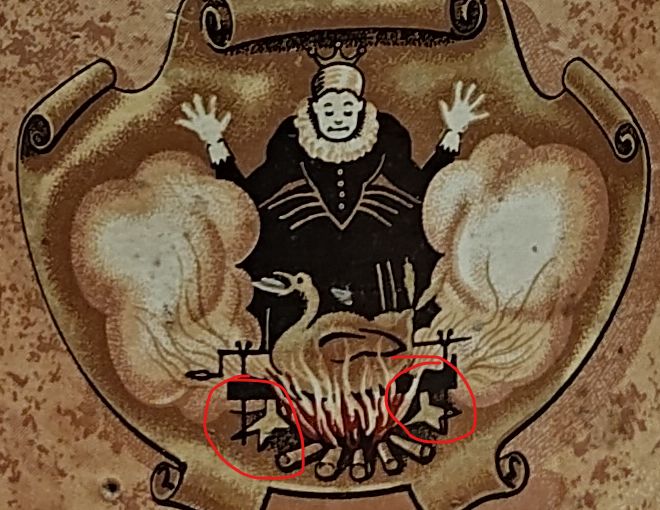
According to the story, there once lived a beautiful and virtuous princess, her father was cruel and tyrannical. God did not wish such a noble woman to embrace pagan beliefs, so she was afflicted with leprosy and developed goose feet (pè d’auca, later becoming pied d’oie).
Eventually she was baptized and converted to Christianity. Her leprosy was cured, but she retained her goose feet and thus became known as La Reine Pédauque(The goose feet queen).
On the label of this 1928 La Romanée, we can still see La Reine Pédauque depicted with her goose feet. The label on this bottle is now difficult to read because of age, but the design can be seen more clearly on a later bottle.
The fate of the restaurant, La Rôtisserie de la Reine Pédauque, was very dramatic.
In the 1970s, the restaurant became entangled in a national scandal that ultimately led to its closure.
In 1976, the restaurant faced financial difficulties. Its chairman, Patrick de Ribemont, sought to take over the business from his boss Monique André. He borrowed four million francs from the prominent French politician Prince Jean de Broglie (1921–1976), who was both a member of parliament and a nobleman.
Shortly after the loan was made, Jean de Broglie was assassinated on a Paris street on December 24, 1976.
Patrick de Ribemont and several accomplices were arrested.
The following year, 1977, the restaurant entered liquidation proceedings and subsequently closed permanently.
The Burgundy negociant house La Reine Pédauque was very successful since its creation. Pierre André successfully expanded his business and gradually acquired several domains and vineyard holdings in Burgundy. The business later passed to his son-in-law and then to the next generation before eventually being sold to another company in 2012.
Old bottles are more than wine. Sometimes they preserve traces of people, places, and stories that would otherwise have faded away. This 1928 La Romanee from La Rôtisserie de la Reine Pédauque is one such example.
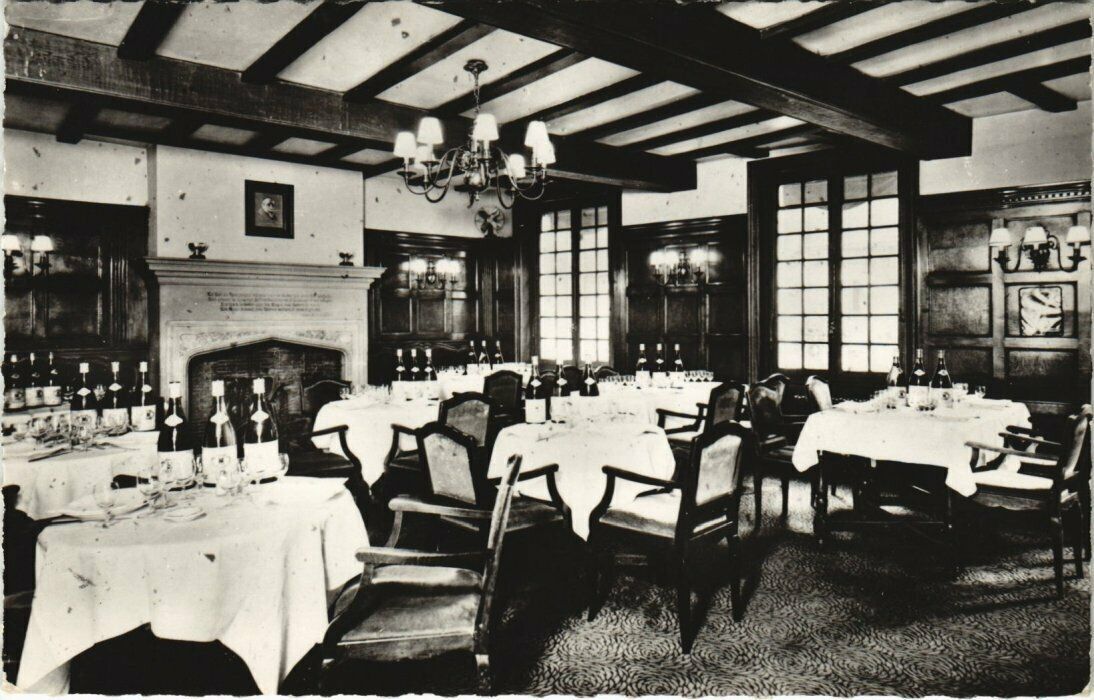
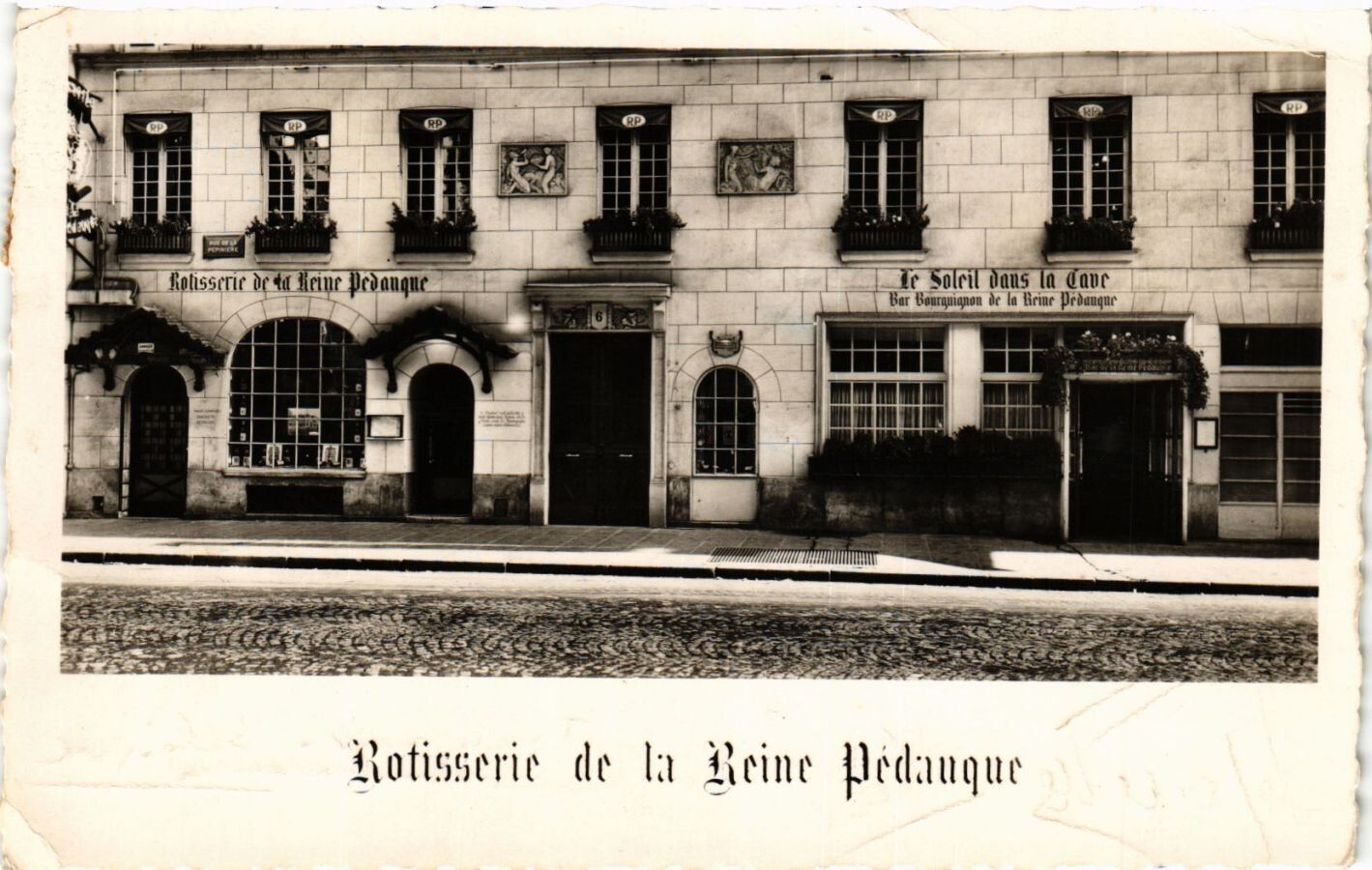
(Images of restaurant La Rôtisserie de la Reine Pédauque Source: Cartorum)
The wine images featured in this article are from Victor’s collection.
 - A true vin d’émotion – a Burgundy of passion
 - A truly hedonistic wine – lively and enjoyable
 - A vivacious wine for pure indulgance
 - A potential vin d´émotion - frais et léger