

Burgundy is a lot about history old producers and old wines … it sets the scene for the wines we drink today and the Burgundy we love.
I have therefore decided to get the help from a good friend, who has special competences regarding old wines – Pearl Liu
Pearl Liu
, a Burgundy enthusiast with a special interest in old wines and wine history. Through bottles, labels, and archives, she explores the history, vignerons, domaines, and heritage behind Burgundy wines, from celebrated names to forgotten chapters of the past.

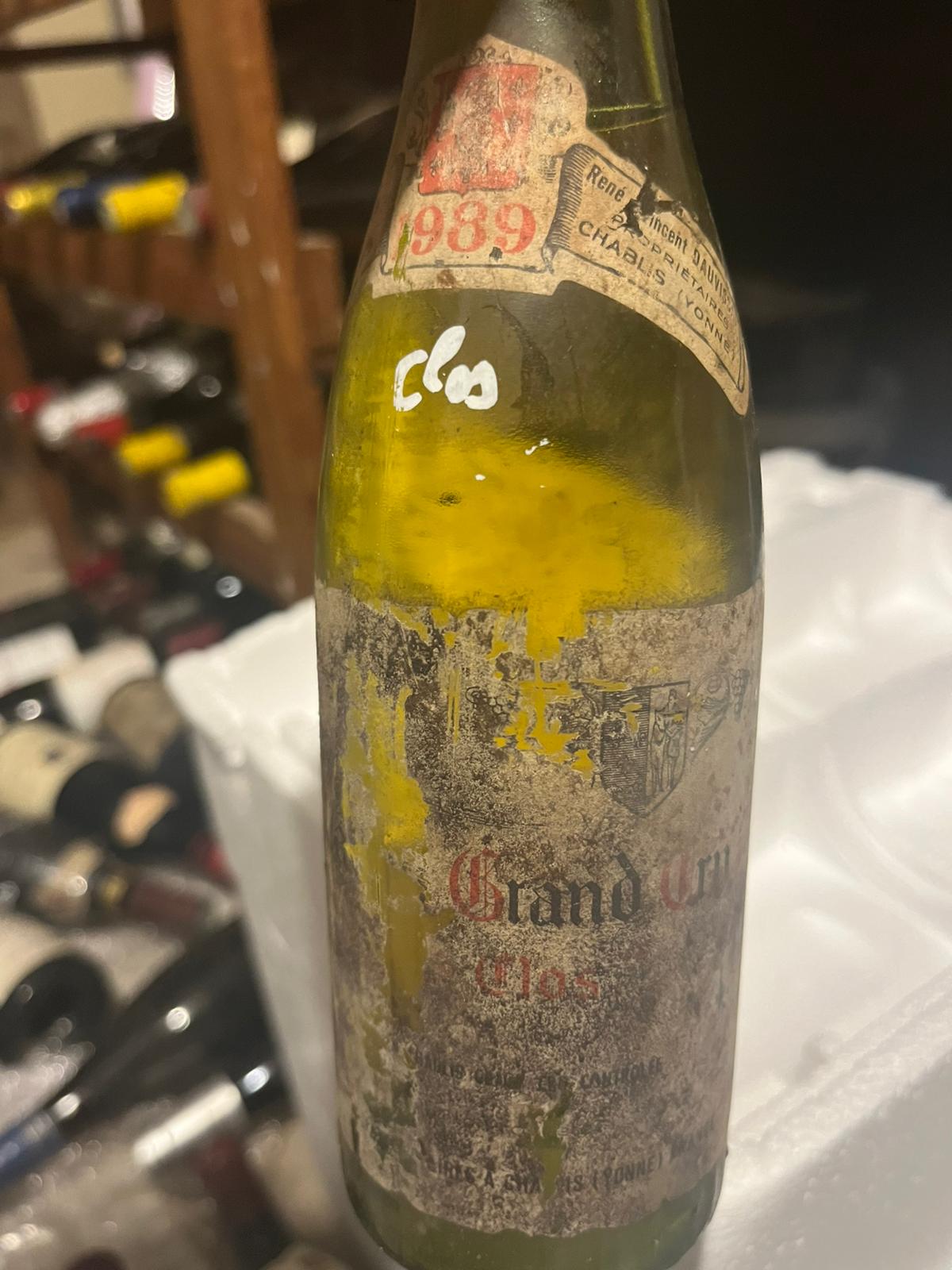
This bottle of 1923 La Tâche is from a complex period with negociant bottlings and dubious La Tâche bottling made by small negociant producers. Add to this Domaine Liger-Belair and Domaine de la Romanèe-Conti sold negociant cuvées to some of the big negociants like Nicolas.
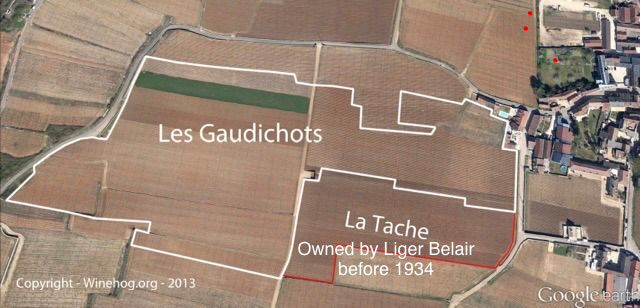
In 1923, Liger-Belair owned 1.4 hectares of La Tâche, which they bottled and distributed by themselves. On the other hand, DRC owned most of the neighboring 4.6 hectares of Les Gaudichots, and their wines were often bottled by different négociants. Some of these négociants sold the wine under the name La Tâche. At the time, both Liger-Belair bottlings and négociant bottlings of La Tâche coexisted on the market.
The mysterius Tâche
This 1923 bottle was bottled by ETABLISSEMENTS NICOLAS (Maison Nicolas), which domaine did they source the wine from?
On the lower-left of the label it states: “Cuvée Liger-Belair”, indicating that it could come from the 1.4 ha La Tâche Joly de Bevy owned by Liger-Belair?

However, according to Jean-Francois Bazin, since 1853, the Liger-Belair and Marey family exclusively marketed La Tâche under the name Maison C. Marey et Liger-Belair. The bottle below is a Liger-Belair domaine-bottled La Tâche 1923.

Is it possible that there was an exception in 1923?
Some background of Maison Nicolas back then:
Maison Nicolas was founded in 1822 and became one of the largest wine merchant and retail companies in France. By 1919, they had 138 stores. In 1920, the owner at the time, Étienne Nicolas(1870-1960), purchased 5 hectares of land in Charenton, near Paris, where he built the company headquarters. Wines purchased in barrel from domaines were aged and bottled there in limestone cellars.
Maison Nicolas bottled many of Burgundy’s greatest wines: Romanée-Conti, La Tâche, Chambertin, Montrachet, Musigny, Clos de Vougeot, Romanée-Saint-Vivant…
From 1922, Nicolas published a catalogue every year, listing some important wines they were selling. It is said these catalogues were released before Christmas each year.
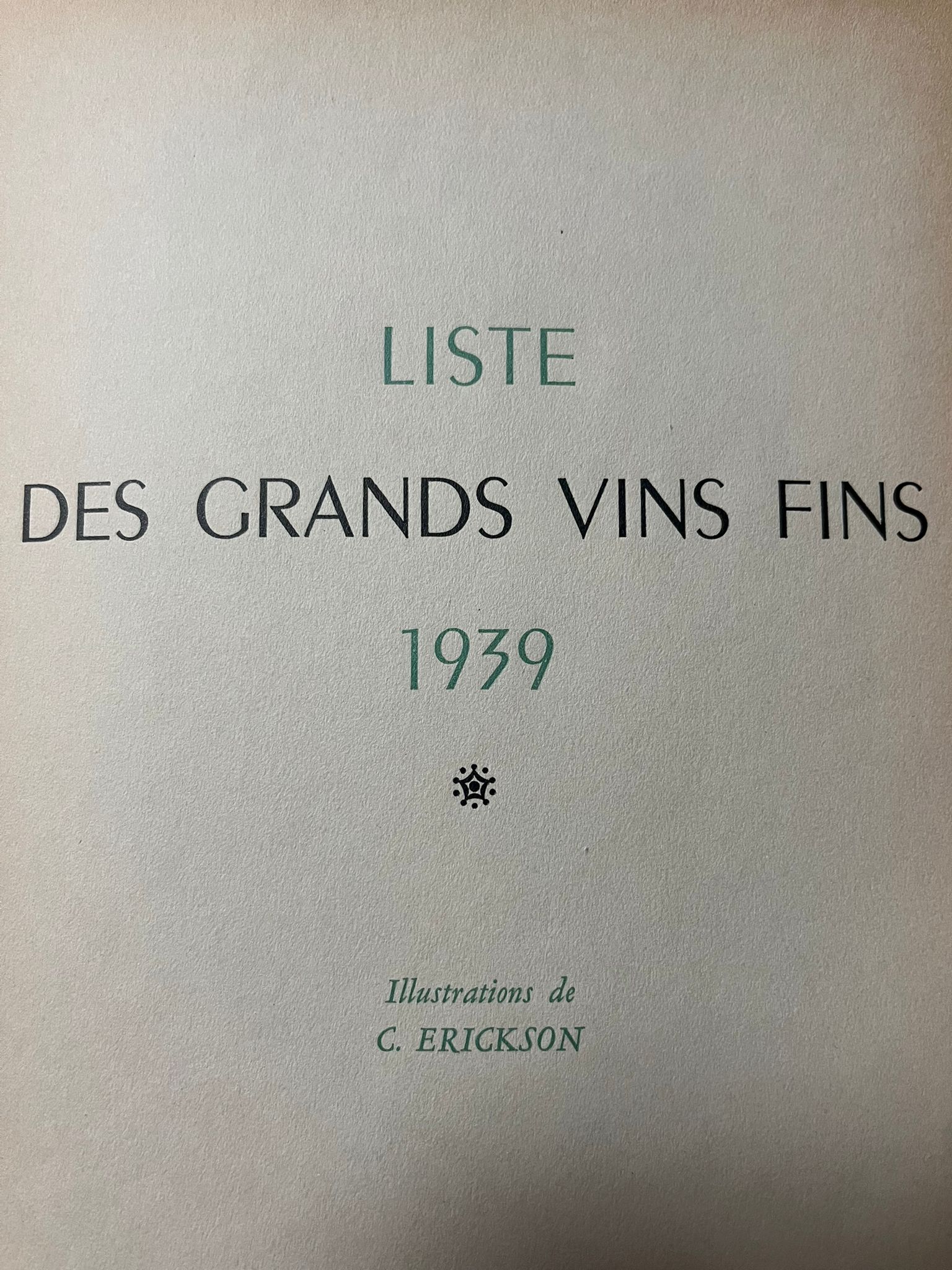
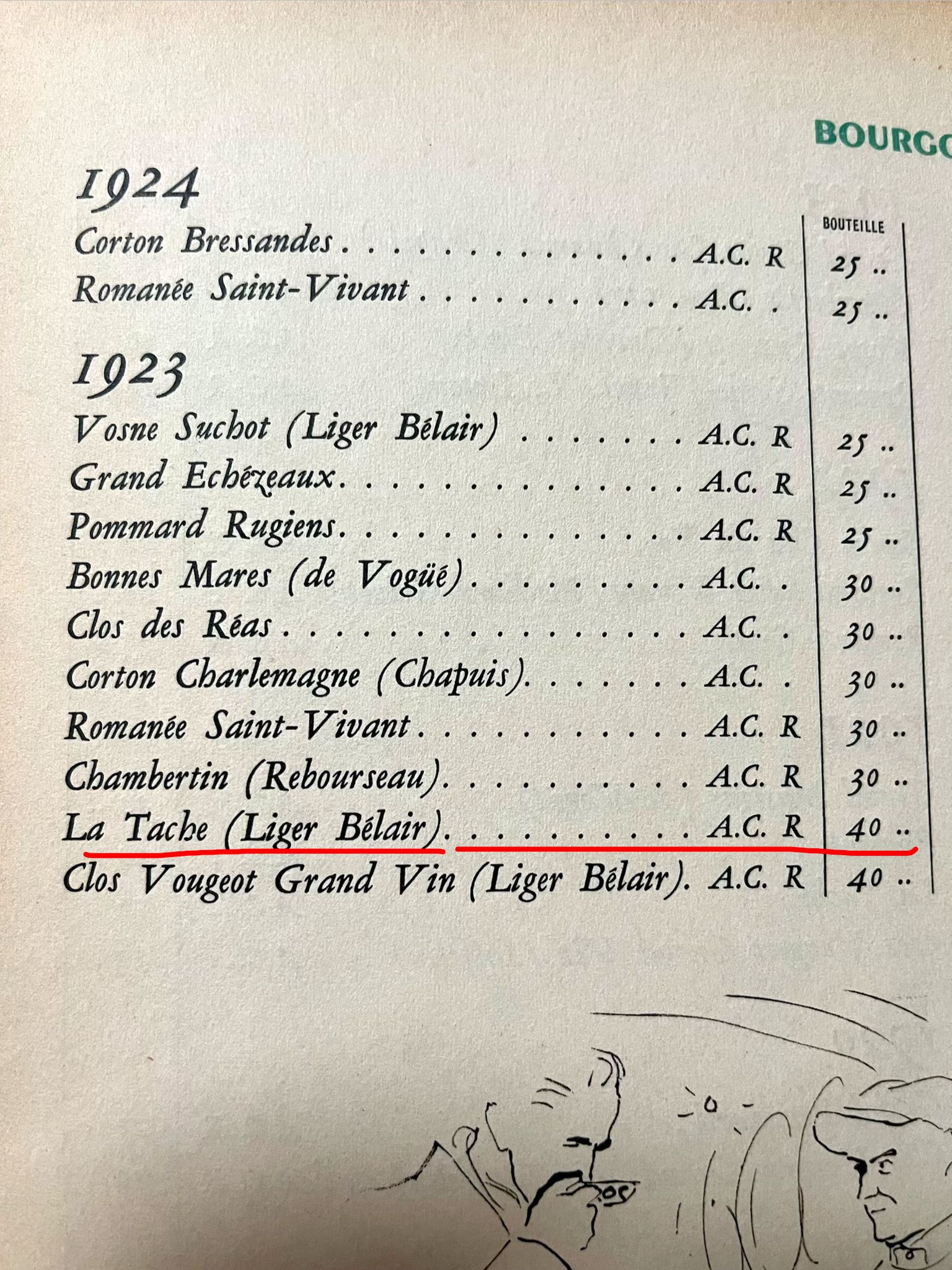
I have an original 1939 Nicolas catalogue in which the 1923 La Tâche appears.
It is listed as:
1923 La Tache (Liger Belair)
It was listed in the 1938 Catalogue too:
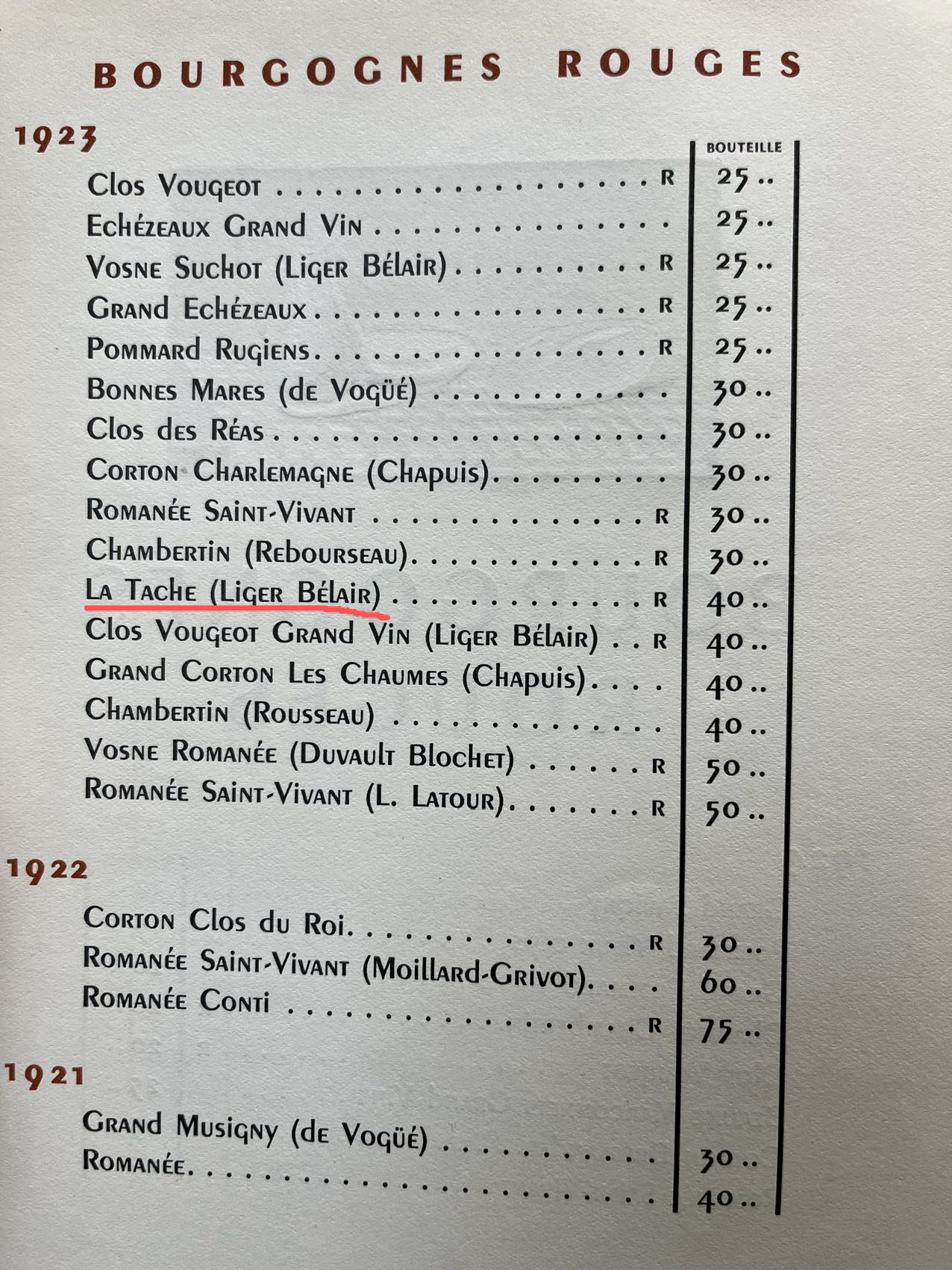
( 1938 Nicolas catalogue)
In 1923, Maison Nicolas did not only bought some La Tâche from Liger-Belair, but also “Vosne Romanee Suchots” and “Vougeot”.
But there is another question, could the 1923 La Tâche was a domaine-bottled wine from C. Marey et Liger-Belair, meaning Nicolas was simply retailing bottles already bottled by the domaine.
We may find the answer by reading the first few pages of this Catalogue.
Nicolas explained that only those wines marked with a ★ symbol were bottled at the domaine. Some Bordeaux wines in the catalogue carry this marking.
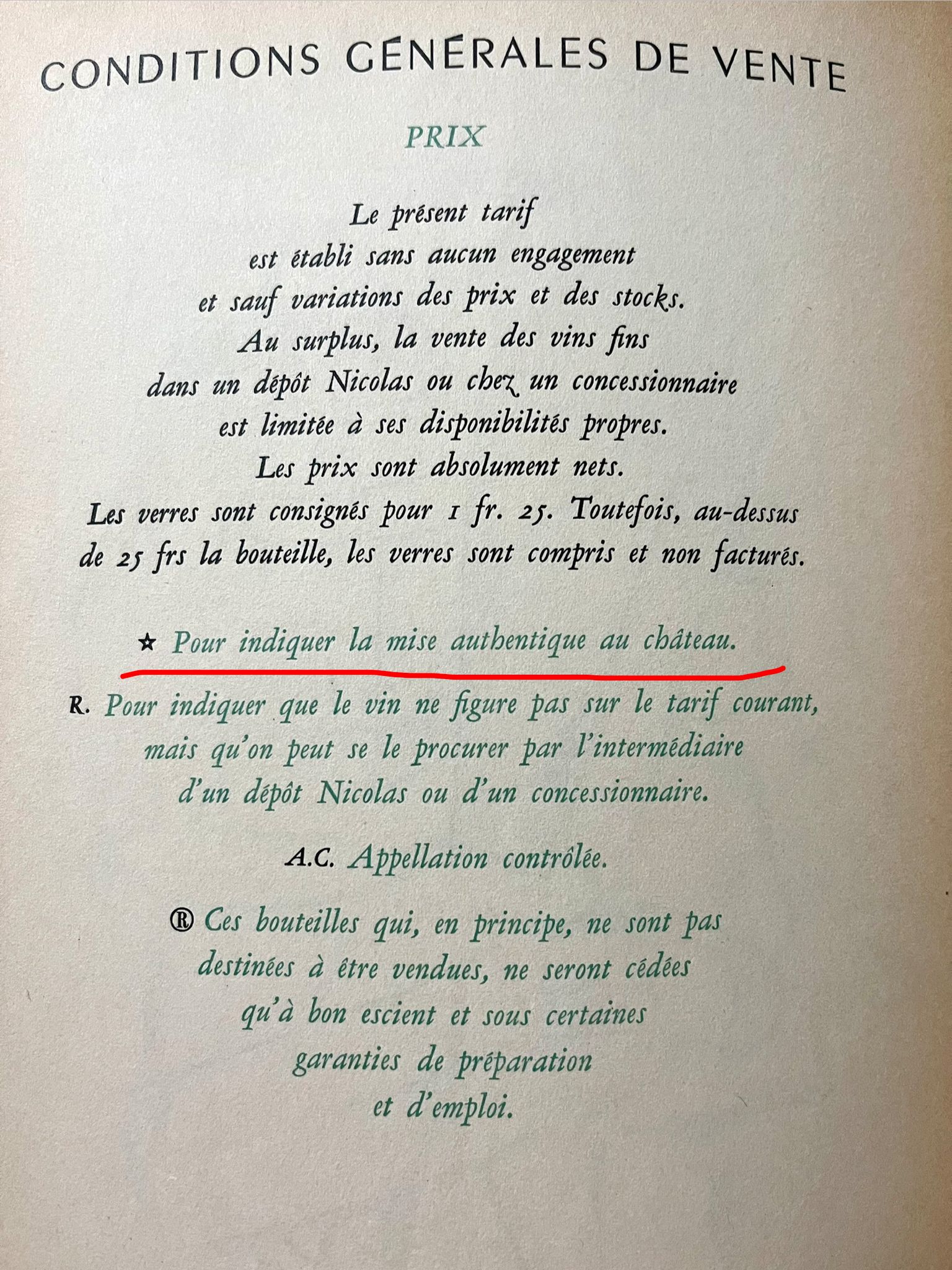
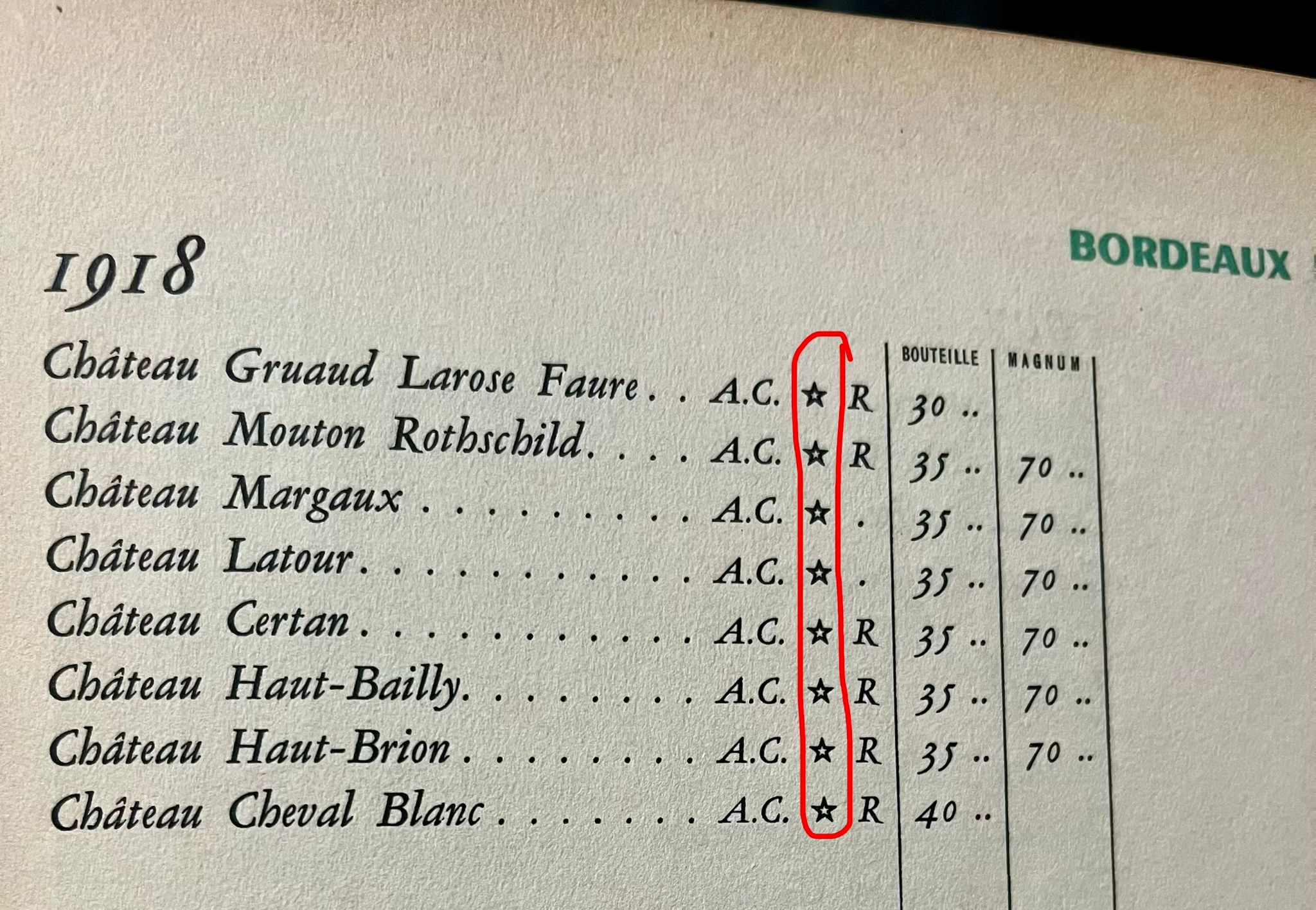
But the 1923 La Tâche (Liger-Belair) has no ★ symbol, meaning the one listed here is not the C. Marey et Liger-Belair La Tâche, but most likely a Nicolas bottled wine.
Furthermore, we can see that Nicolas usually put the domaine names in () after the name of the wine. so, 1923 La Tache (Liger Belair), suggesting the wine was sourced from Liger Belair.
Since both the catalogue and the bottle label explicitly state Liger-Belair, we may conclude that this La Tâche indeed came from Liger-Belair, rather than from plots owned in Les Gaudichots and named La Tâche by some of the lesser negociant houses.
1923 was an execptional vintage in Burgundy. It is possible that yields were relatively high and quality excellent. Nicolas may have purchased some barrels from Liger-Belair and bottled the wine themselves for their retail customers. The wine remained available for many years in Nicolas’s store, for their Christimas’ special.
Even in the 1960s, Nicolas still listed it in their catalogue for limited annual release.

(1969 Nicolas Catalogue, on the page of “Bouteilles Exceptionnelles “, bottles on this page should only be opened in the store and then sent to client’s 1 hour before serving)
Interestingly, in 1991, Nicolas said something different about this 1923 La Tâche.
Earlier this year, a French wine merchant, Prestige Cellar, sold one bottle of 1923 Nicolas-bottled La Tâche(same label as the first picture in this article). They posted some pictures from a magazine published by Nicolas in November 1991. The 1923 La Tâche was listed as:
1923 La Tâche (Domaine de la Romanée-Conti)
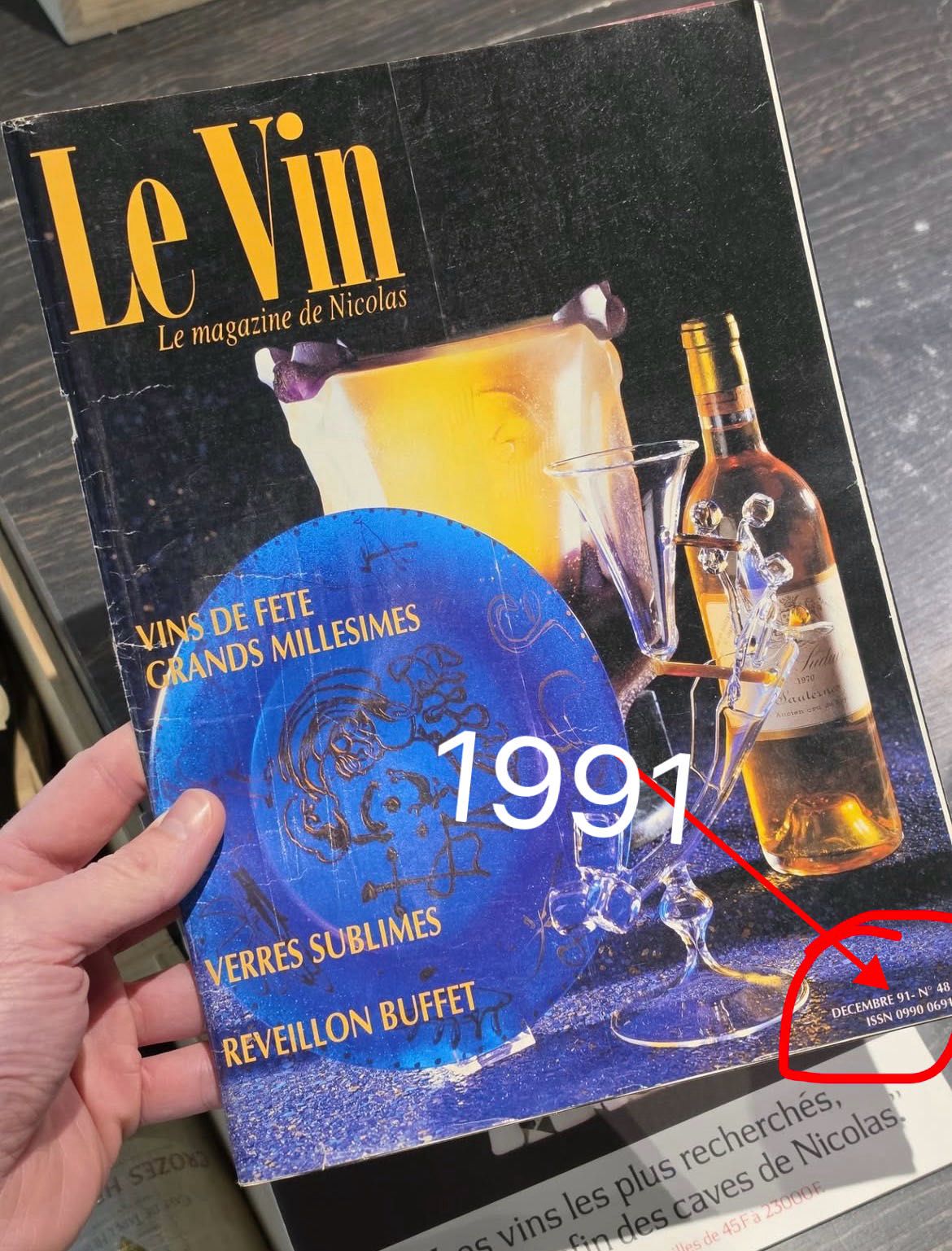
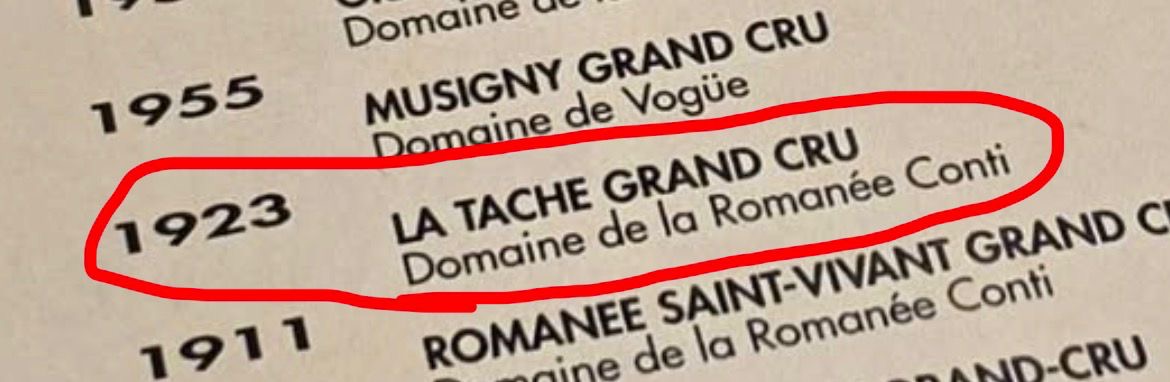
Since there is no 1923 DRC label La Tâche, so the one that appears on the 1991 Nicolas magazine is the one that appears on the 1938 and 1939 Nicolas catalogue, also the same as the actual bottle with the Nicolas label shown in the photo.
After discussing this with the wine merchant, we both agreed that the 1991 listing was likely incorrect.
I believe the 1939 version is more reliable, for several reasons:
1. Maison Nicolas had already been sold to Rémy Martin in 1984. By 1991, it was no longer the original Maison Nicolas.
2. In 1991, the editors were writing about a wine already 68 years old and were not firsthand witnesses.
3. It is also possible that they automatically attributed all La Tâche wines to DRC, since by 1991 La Tâche had long become a DRC monopole.
4. The 1938 and 1939 catalogues appear far more reliable, as Étienne Nicolas himself was still in charge of the company at the time. He would likely have been directly involved in purchasing the wines from the domaines.
Therefore, I believe that although Liger-Belair usually bottled La Tâche under their own label, in the exceptional vintage of 1923, they sold some barrels to Nicolas, who bottled the wine under the designation “Cuvée Liger-Belair” to indicate its source.
The years 1923–1924 were also particularly difficult for the Liger-Belair family. In September 1924, Henri Auguste Liger-Belair died, leaving behind his wife and ten children, most still very young.
“This premature death struck hard at a family business already weakened by family disputes, the economic crisis of the 1920s, and sometimes impulsive behaviour. In Nuits, people still recount how one day they abruptly threw out the agents of the Administration — the famous ‘rats de cave’ — who had come to carry out inspections.”
[“Ce décès prématuré frappe de plein fouet l’affaire également malmenée par des disputes familiales, par la crise des années 20 et par des manières parfois intempestives. On raconte à Nuits qu’un beau jour on mit promptement à la porte les agents de l’Administration (les fameux rats de cave) venus faire des vérifications.”]
……………….«La Romanee-Conti» 1994, Jean-François Bazin
In 1931, Henri’s wife, Suzanne Liger-Belair, passed away. In 1933, due to inheritance issues, their La Tâche vineyard was forced to be auctioned. DRC acquired the parcel and merged it with Les Gaudichots, creating the 6.06-hectare La Tâche monopole. Since then, there has been no more Liger-Belair La Tâche.
Today, after decades of revival and development, the Liger-Belair family has once again returned to the very top rank of Burgundy domaines.
As for La Tâche, it became the 6-hectare monopole of Domaine de la Romanée-Conti and remains one of the greatest wines of Burgundy.
Meanwhile, Maison Nicolas changed hands twice and is still one of the biggest retail chain for wine in France.
Yet this old bottle still preserves a forgotten moment from a very different Burgundy.
The conclusion in this article is a personal interpretation based on the currently available evidence. Future discoveries may well lead to different conclusions, and I am open to further discussions.
(The pictures of Nicolas bottled La Tache 1923 are from Victor’s collection)
Pearl Liu
, a Burgundy enthusiast with a special interest in old wines and wine history. Through bottles, labels, and archives, she explores the history, vignerons, domaines, and heritage behind Burgundy wines, from celebrated names to forgotten chapters of the past.
 - A true vin d’émotion – a Burgundy of passion
 - A truly hedonistic wine – lively and enjoyable
 - A vivacious wine for pure indulgance
 - A potential vin d´émotion - frais et léger